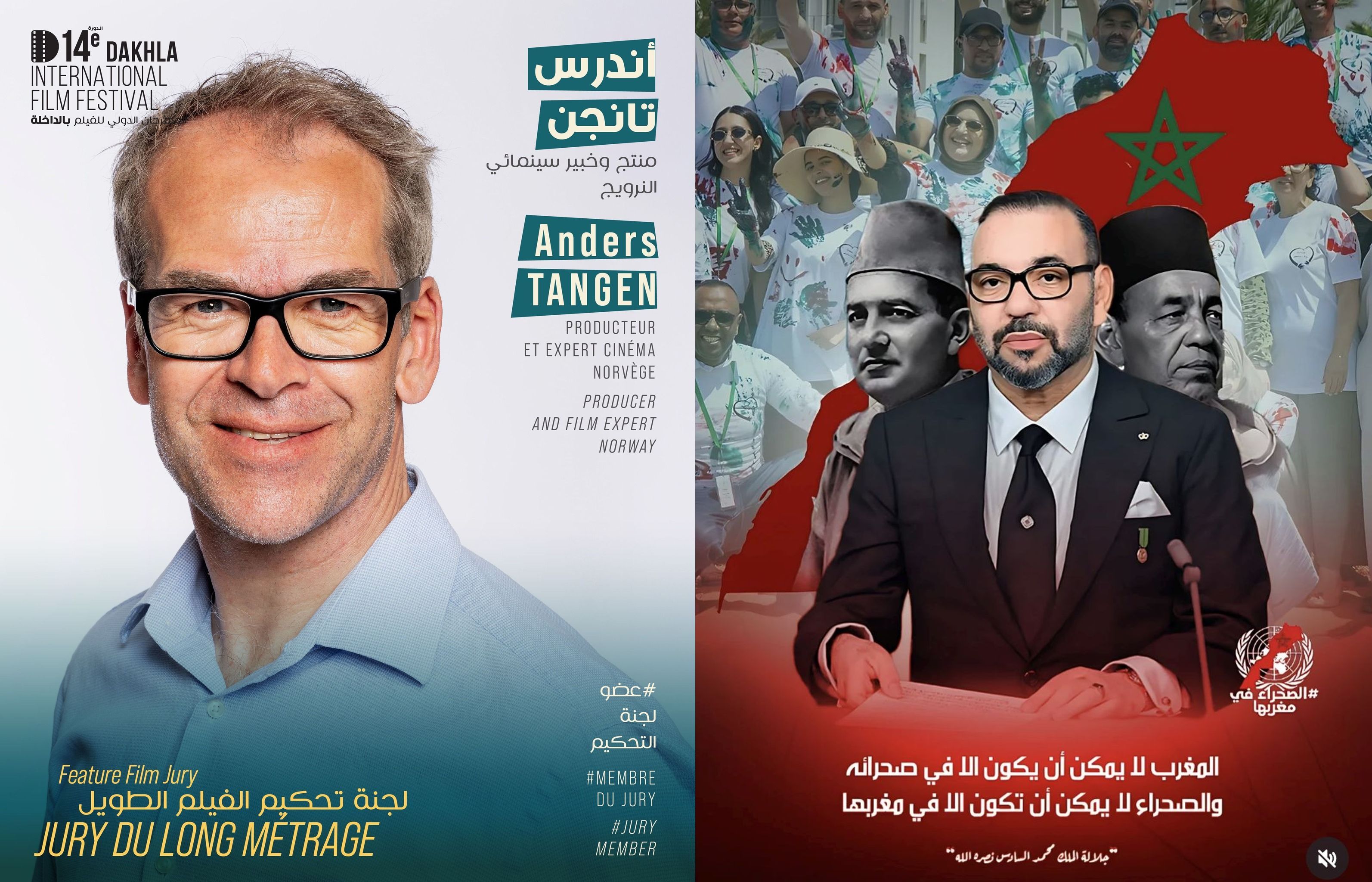
The producer behind the Netflix series Lilyhammer is contributing to Morocco’s brutal occupation of Western Sahara.
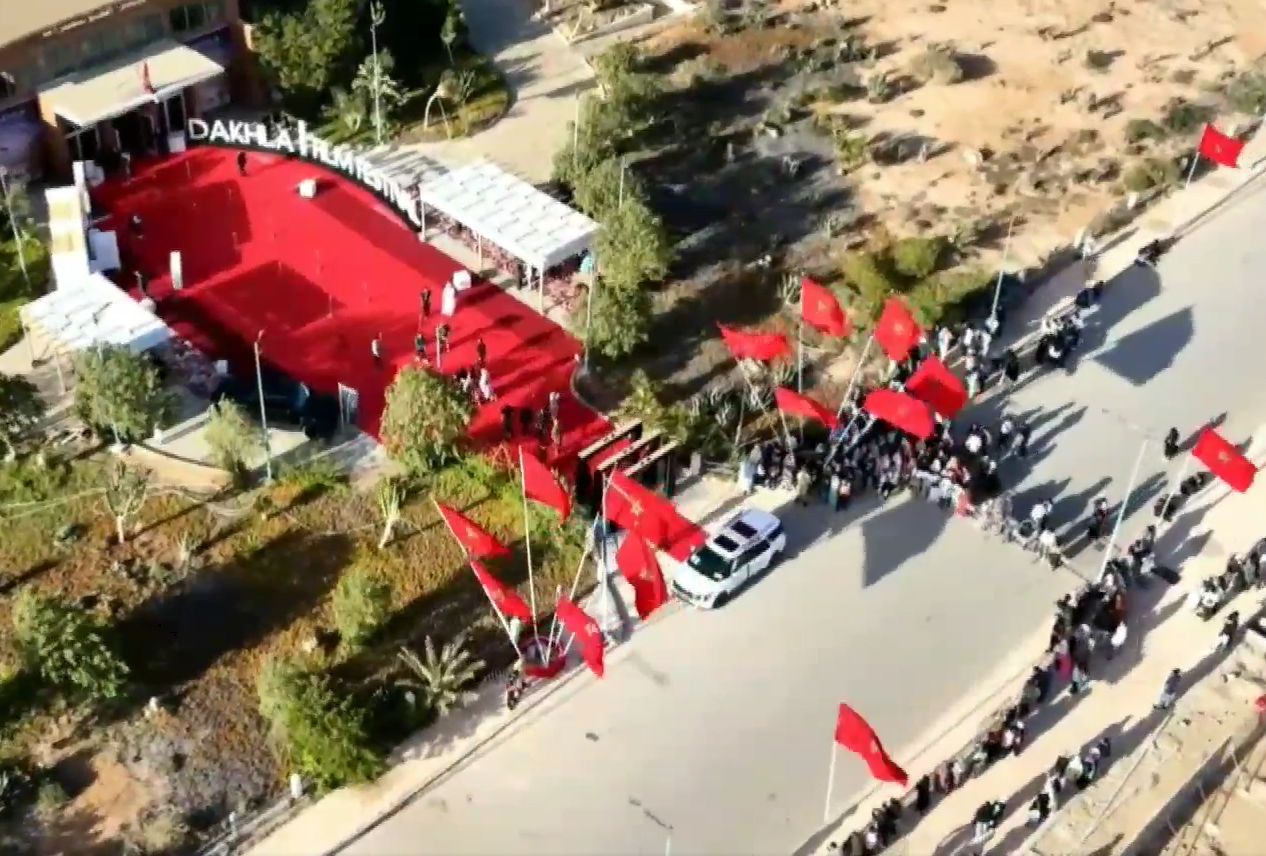
Film producer Anders Tangen has travelled this weekend to occupied Western Sahara to serve as a jury member at the Dakhla International Film Festival. The festival is one of Morocco’s tools for normalising its illegal and brutal occupation of the territory.
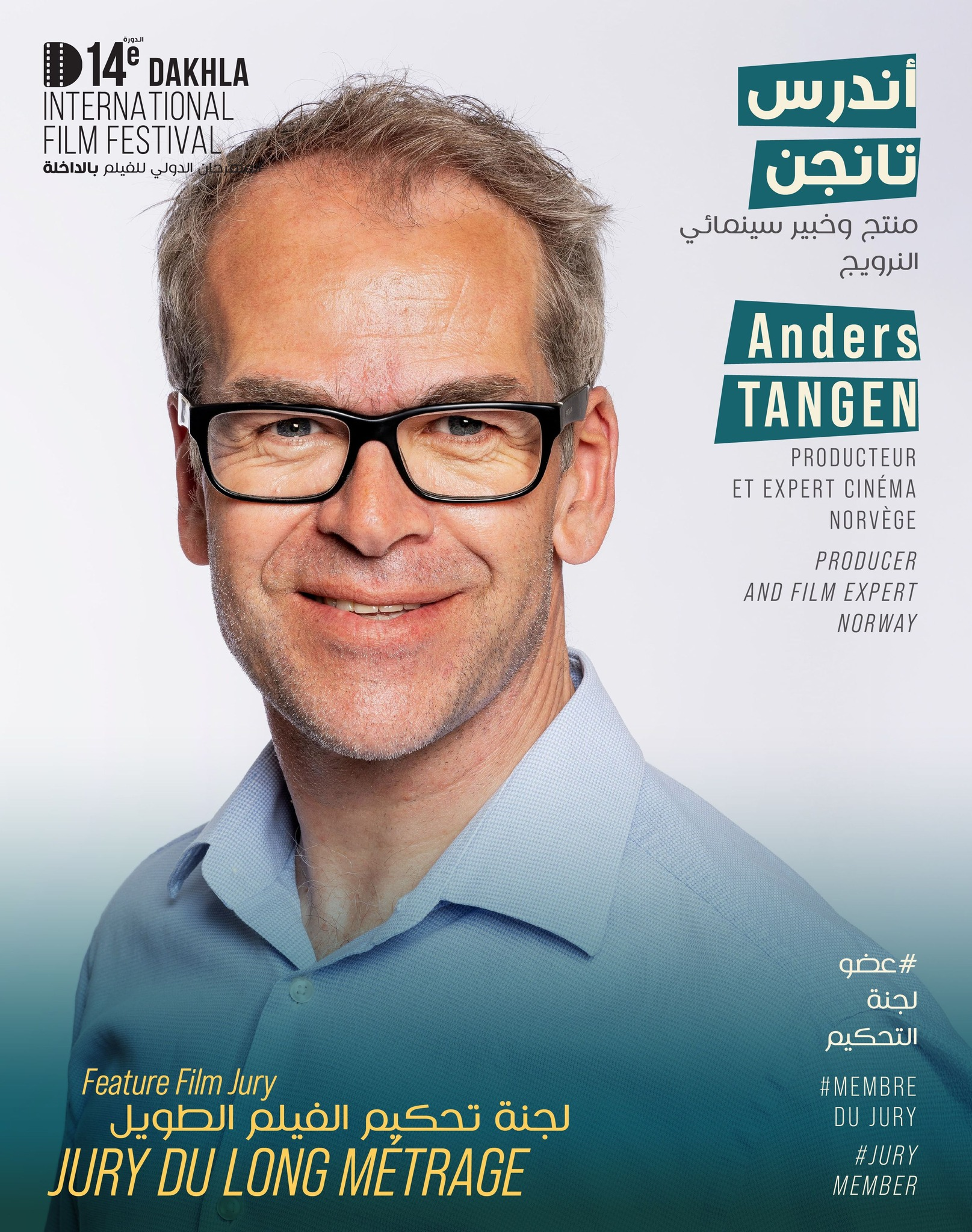
The festival announced the Norwegian participation on Instagram and Facebook on 22 May. The social media posts about Tangen claim that the film festival is taking place in “Dakhla, Morocco”, but that is incorrect. Dakhla is not located in Morocco. The controversial event is being held from 6 to 12 June in occupied territory.
As far as the Norwegian Support Committee for Western Sahara is aware, Anders Tangen is the first Norwegian cultural figure to participate in such a Moroccan cultural event in the occupied territories.
Tangen is behind productions such as the Netflix series Lilyhammer and Vikingane.
Nearly all of the approximately 150 Norwegian citizens who have travelled to Western Sahara over the past decade to meet Sahrawis have been denied entry or deported by Moroccan authorities.
Tangen, invited by the Moroccan festival, will therefore be the exception to the rule.
In recent years, Morocco has taken increasing steps to normalise the occupation through cultural events, sporting competitions, academic conferences, renewable energy projects and tourism. This is happening while half of the Sahrawi people live either as refugees or under Morocco’s iron grip in their own country. The Support Committee was interviewed by the BBC last week about the related tourism boom.
A Spanish filmmaker, one of the very few other invited foreign jury members, announced this week that he is withdrawing from the festival in order not to contribute to legitimising the occupation.
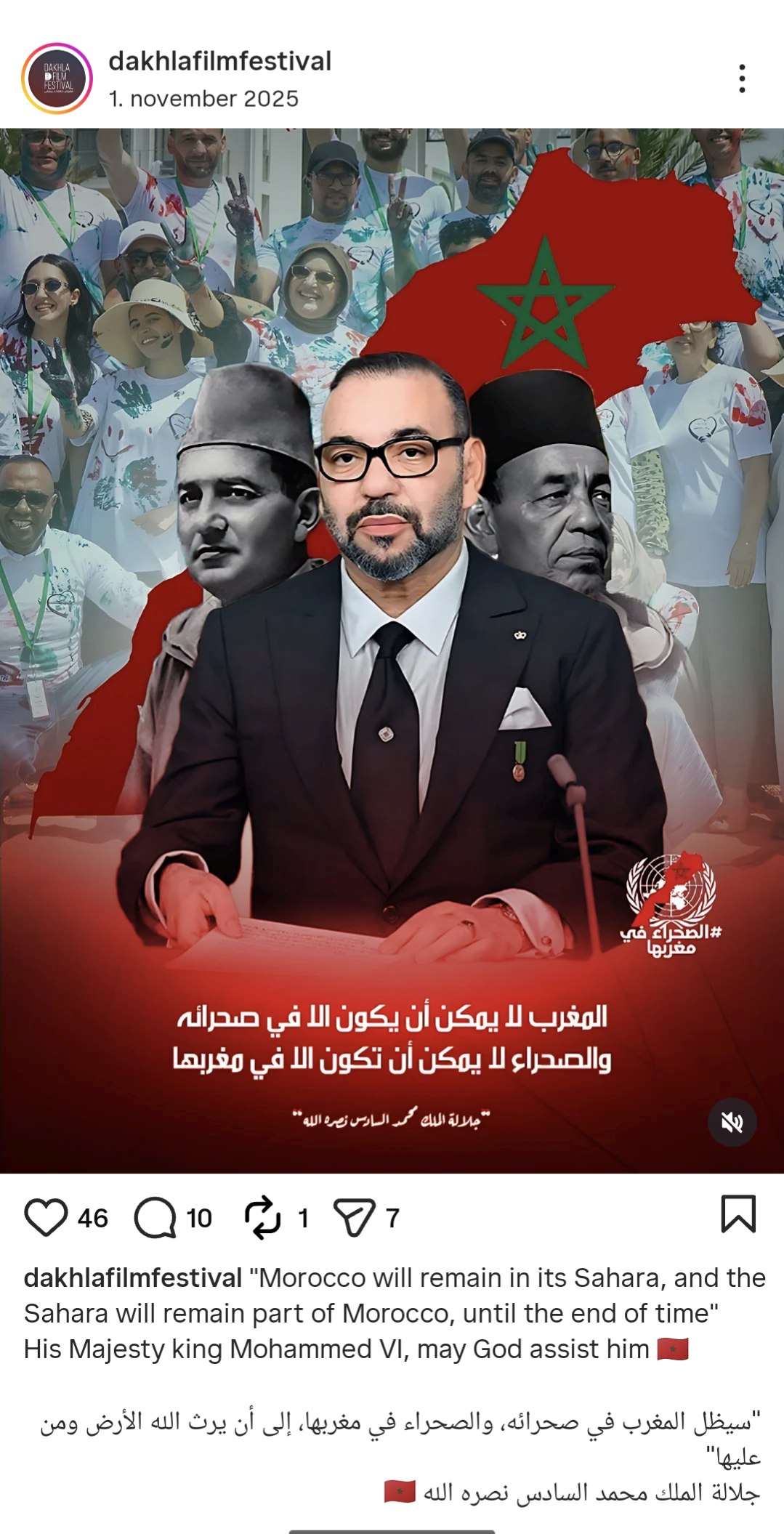
«Morocco will remain its Sahara, and the Sahara will remain part of Morocco, until the end of time”, the festival wrote on its own Instagram account six months ago. Among the film festival’s partners is Morocco’s state news agency, Maghreb Arab Press (MAP). The festival receives Moroccan state funding, including through Agence du Sud, an institution whose purpose is to entrench the annexation.
“The Dakhla Film Festival is highly political and one of the occupier’s tools. The fact that a Norwegian cultural actor fails to understand that a cultural event can serve as a platform for propaganda and disinformation is shocking. From time to time, we observe that international business actors in Western Sahara operate in a kind of bubble, disconnected from the political and human rights reality of which they are actually a part. But that a Norwegian cultural personality can be so devoid of insight into the political and human rights landscape in which he operates surprises us. Tangen and Viafilm are pieces in an occupier’s propaganda machinery,” said Erik Hagen, director of the Norwegian Support Committee for Western Sahara.
In the Committee’s view, the propaganda serves a dual purpose. First, it is domestic: to create a sense of normality around the occupation among the Moroccan population. Second, it is international. By attracting foreign experts, Morocco normalises and conceals one of the most grotesque violations of international law since the Second World War.
The Western Sahara issue is not widely known. Morocco often succeeds in attracting foreign businesses and international actors into the territory without those actors necessarily being aware that they are operating in a territory that the United Nations considers a Non-Self-Governing Territory, rather than part of Morocco. This was most likely what happened when a film production by Christopher Nolan was partly set up in Dakhla, Western Sahara, last year.
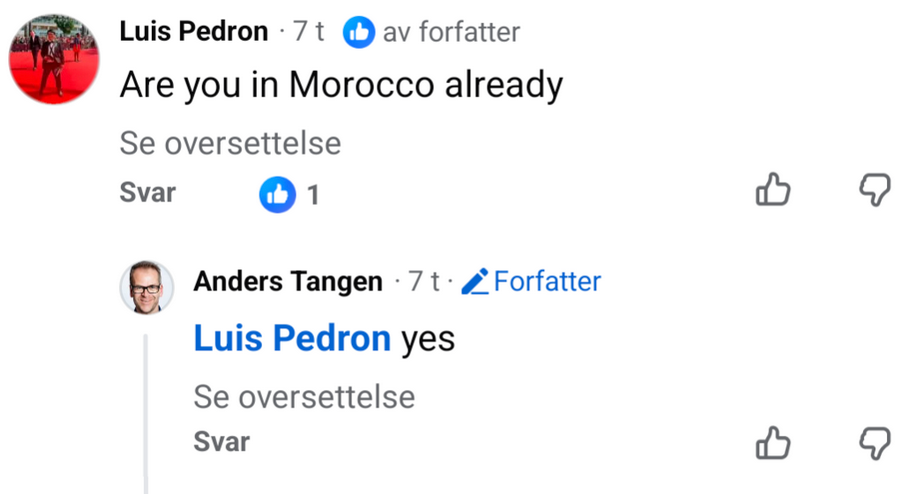
On 2 June, the Norwegian Support Committee for Western Sahara received direct confirmation from Tangen that he intends to attend the event and that he will not receive remuneration for the assignment. In an interview with Norwegian broadcaster TV 2, Tangen stated that he opposes cultural boycotts, that he is not engaged in politics, that he is travelling to meet other people, and that he respects that others may have views on his participation.
“Tangen demonstrates a complete lack of understanding of where he is travelling and of the suppression of Sahrawi voices. This is not about a cultural boycott of Morocco. It is about not participating in propaganda celebrations organised by occupiers on occupied land. Tangen is not being welcomed there by the people of Western Sahara. He should take the first flight back to Norway,” said Hagen.
Equipe Media, a Sahrawi collective of journalists and filmmakers, condemns the international participation.
Norway’s Ministry of Foreign Affairs advises Norwegian businesses against operating in the occupied territories. This advisory is based on international law. In a post on Viafilm Channel’s Facebook page, the company wrote that it was “So happy to be a part of this”.
“In light of Viafilm’s lack of judgement regarding fundamental human rights, we encourage NRK and other purchasers of film and television productions to undertake particularly thorough assessments of the company in future procurement processes,” said Erik Hagen.
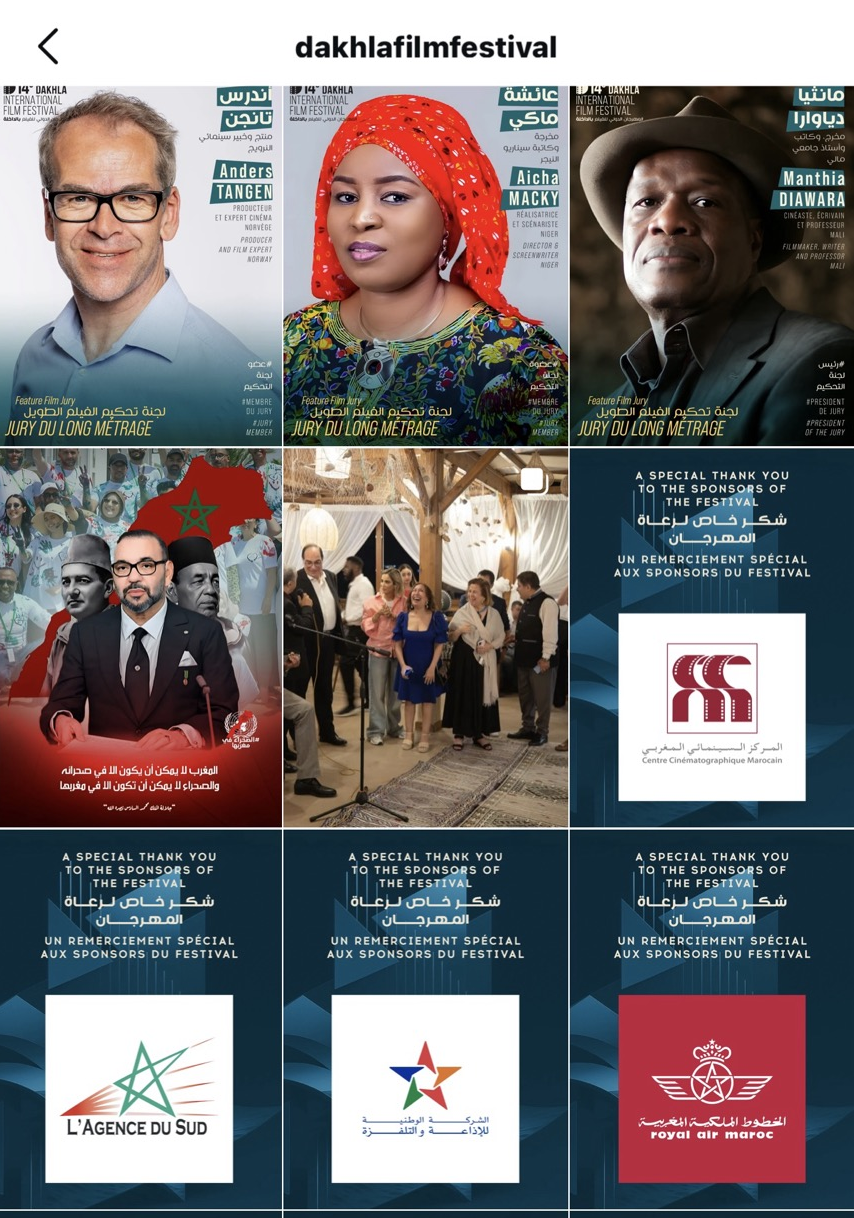
1) Anders Tangen.
2) Quotations from the Moroccan King stating that Western Sahara will always remain part of Morocco.
3) A message of thanks to the Moroccan agency responsible for entrenching the annexation of the territory - Agence du Sud - which funds the festival.
New report: Sahrawi students beaten, isolated and denied medical care in Moroccan prisons
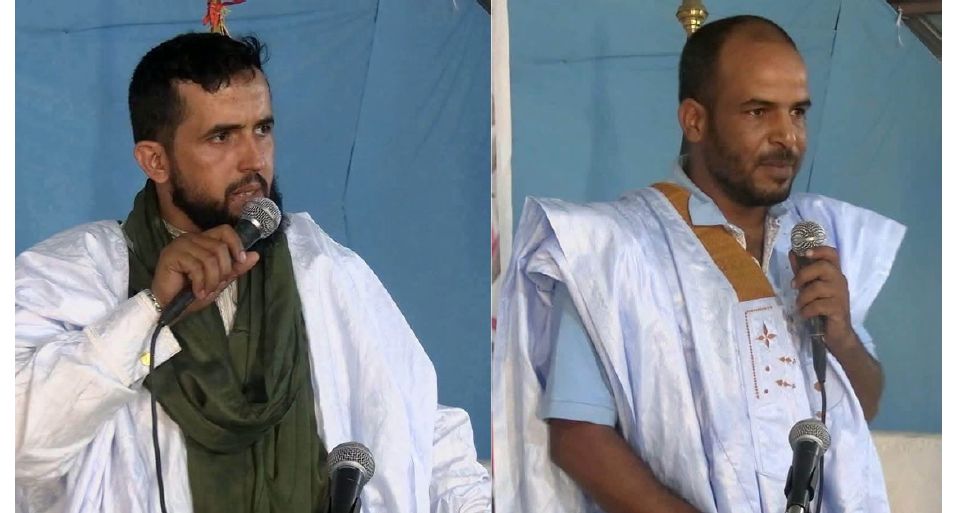
They were beaten with batons until they nearly lost consciousness and threatened with rape if they did not confess. This is the testimony of recently released Sahrawi students in a new report following a decade in Moroccan prisons.
Family fears for human rights defender after days without contact
The family of Saharawi human rights defender and political prisoner Naâma Asfari says it has had no contact with him since Monday. Asfari is now on the 40th day of his hunger strike, and his family fears for his life and health.
Trial underway over firebombing of our partner in Denmark
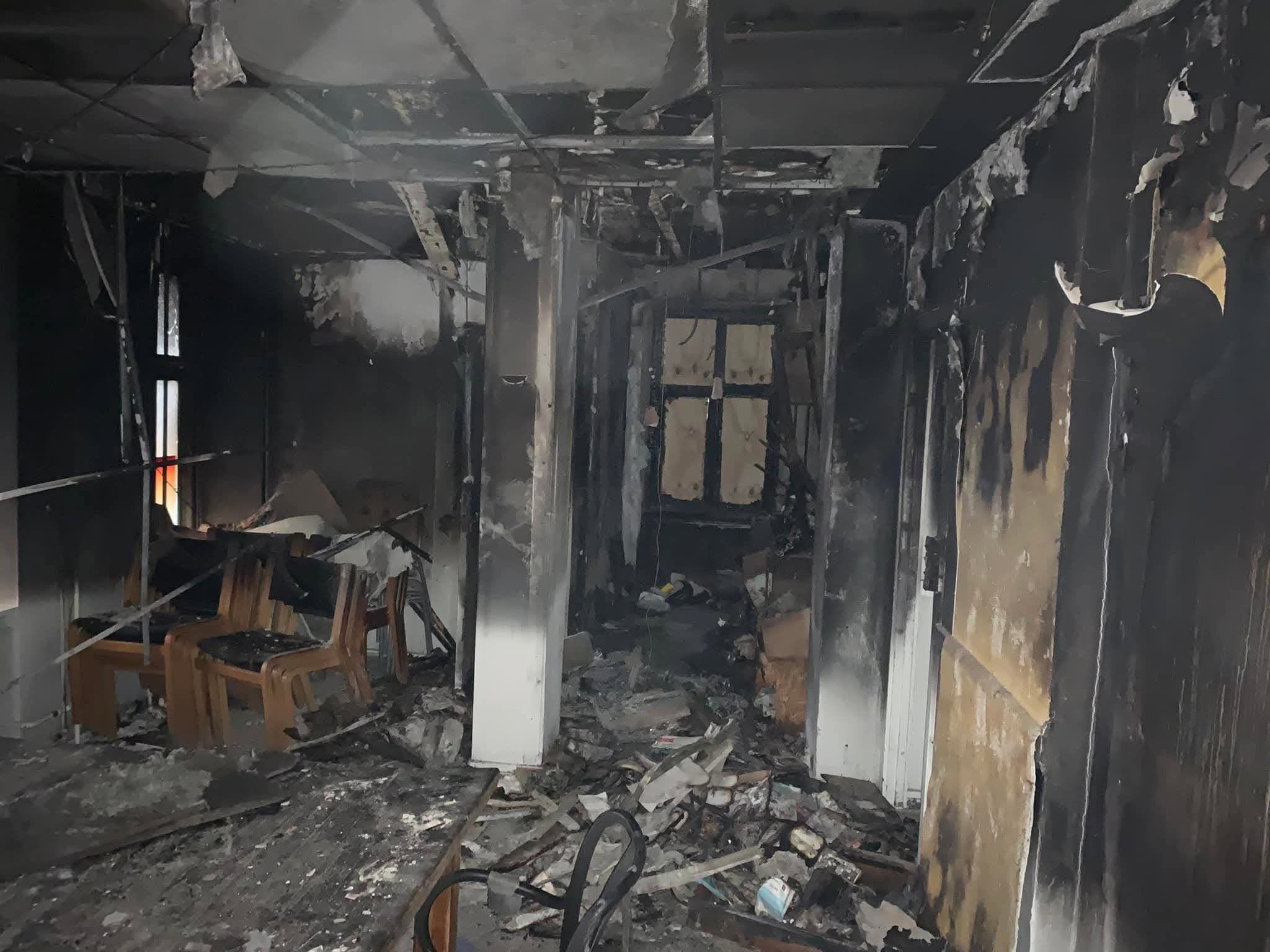
A trial has begun in Copenhagen against four men accused of carrying out the January 2025 arson attack on the offices of our partner Global Aktion.
Film Festival Silences Saharawi Voices
The Moroccan film festival Dakhla International Film Festival is rapidly deleting critical comments from its social media channels.